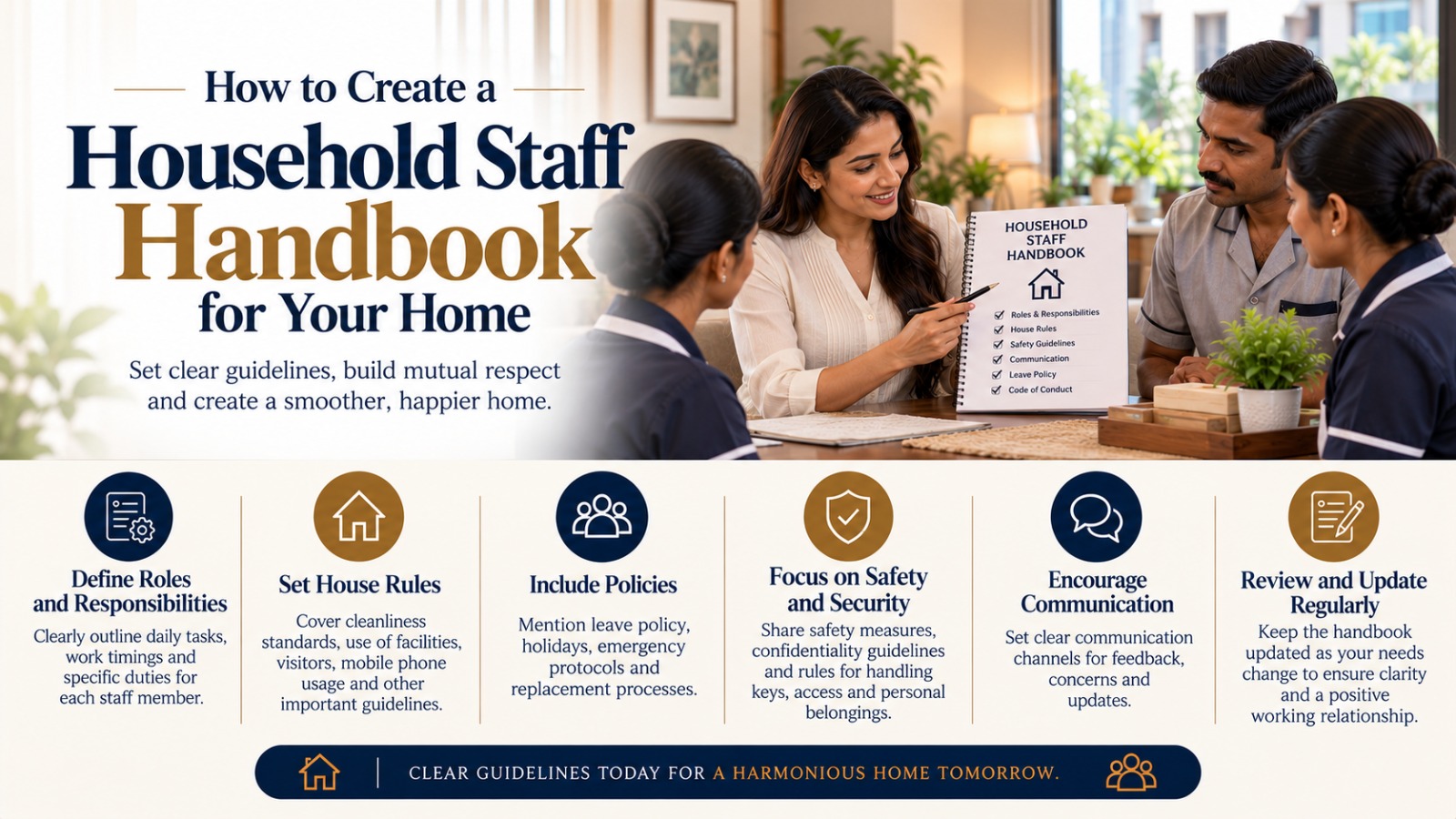
Most families have a list of house rules in their head, including where items go, meal times, personal spaces and who to contact in an emergency. As you can’t get into your employee’s head to tell them your rules you can simply make a house staff booklet. This is one of the easiest ways for your new hire to get settled and know what is expected of them. Here’s how to make a house staff booklet.
1. Why a Handbook is Important
Having your rules in your head means that your staff will learn through trial and error. This can make your employee feel like they’re failing. Having a written handbook means your new staff have a clear guide to follow. It also means less repetition and shows that you are organised and professional with your home.
If you have staff changing then having a good handbook means that whoever comes onto your team can easily get used to your house rules.
2. Introduce Your Home
Start your handbook with a quick introduction to your home and family. Add in the names of your family members, some general information on your routine and any important information about your home such as pets, allergies and food preferences.
This makes your new staff feel like part of your team from day one.
3. Roles & Responsibilities
List out clearly what duties each role has within your home. Make sure to be specific. Instead of saying ‘keep the kitchen tidy’ say ‘wipe the countertops and mop the floor after dinner’.
Also list who each ge. If you have a lot of staff within your home this will prevent any confusion.
4. House Rules
This is the section most families miss out, but can be the most useful! List out where in your home is off limits/personal space. Tell them if they can use their phone whilst working, any guidelines on visitors and if they need to keep things confidential.
Be clear but friendly. This isn’t a rule book, it’s to take away any confusion.
5. Useful Information
Include any useful information your staff may need. This could include emergency contacts, family doctor, nearest hospital, how to use key appliances, where to find supplies and cleaning products. Also include what to do in case of power cuts, water leaks and unexpected visitors.
6. Work Hours & Communication
Give a summary of work hours, time off, how to let you know they’re not coming in and how they will receive their salary and bonus. Tell them how you like to communicate; via messages, a quick daily check in or through a house manager.
Keep this in line with your written contract of employment.
7. Keep it Brief
A 20 page booklet won’t be read. Keep it brief with a few clear pages. Use simple language and the language your staff are most comfortable with. Have a look through once a year or if anything changes within your home.
Get a Head Start with Solitaire
We at Solitaire Consultancy Services can help your family get a placement set up for success from the initial brief right through to the first month. Having a clear handbook is one of the easiest ways to ensure your new hires get the best start.
Contact Solitaire Consultancy Services today.